52 Results for "

Erythrina melanacantha Taub. ex Harms

" in MedChemExpress (MCE) Product Catalog:
Products (52)

52 Results for "Erythrina melanacantha Taub. ex Harms" in MCE Product Catalog:

7
7 Publications Verification
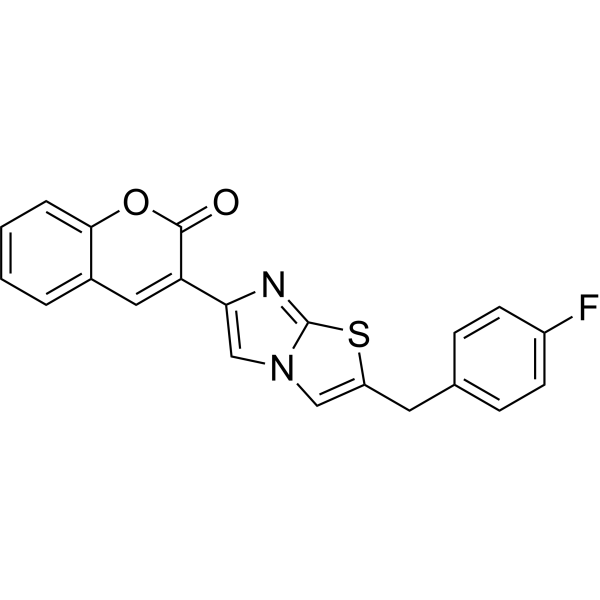
Cat. No.: HY-110171
CAS No.: 881970-80-5
Purity:  99.35%
Target:  

PI3K

Research Areas:  

Cancer

iMDK is a potent PI3K inhibitor and inhibits the growth factor MDK (also known as midkine or MK). iMDK suppresses non-small cell lung cancer (NSCLC) cooperatively with A MEK inhibitor without harming normal cells and mice .
loading...
    loading...
7
7 Publications Verification
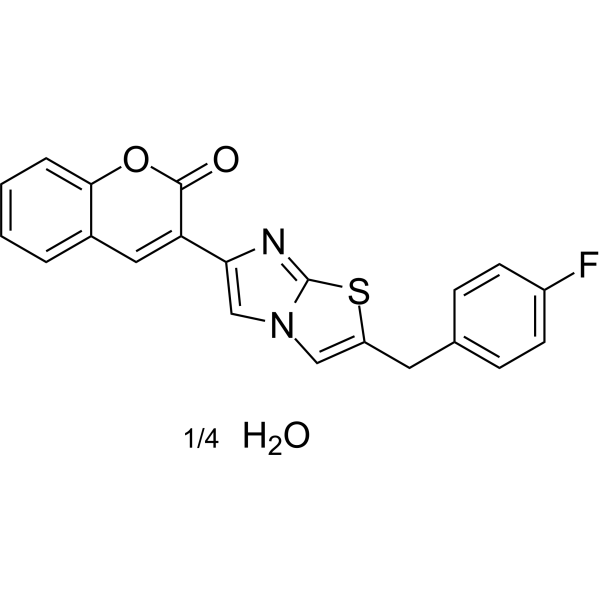
Cat. No.: HY-110171A
Purity:  99.37%
Target:  

PI3K

Research Areas:  

Cancer

iMDK quarterhydrate is a potent PI3K inhibitor and inhibits the growth factor MDK (also known as midkine or MK). iMDK quarterhydrate suppresses non-small cell lung cancer (NSCLC) cooperatively with A MEK inhibitor without harming normal cells and mice .
loading...
    loading...
2
2 Cited Publications
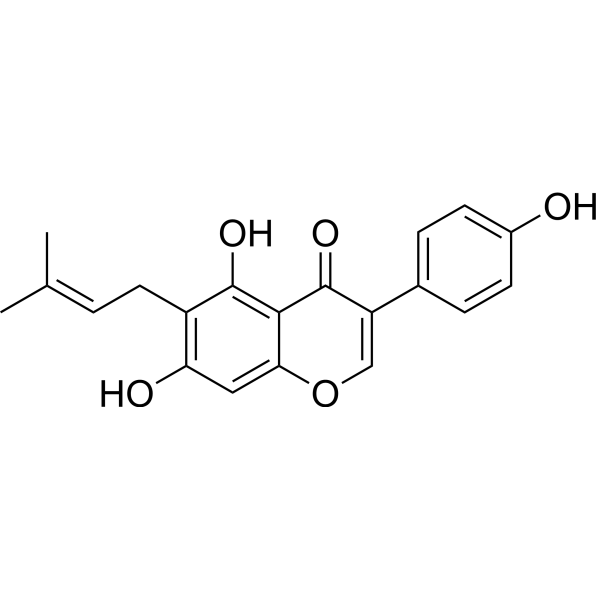
Cat. No.: HY-N1073
CAS No.: 51225-30-0
Synonyms: 6-Isopentenylgenistein; Erythrinin B
Wighteone (6-Isopentenylgenistein; Erythrinin B) is a prenylated isoflavone that acts as a HSP90/EGFR L858R/T790M inhibitor and antifungal agent. Wighteone reduces the expression level of HSP90, blocks EGF-induced phosphorylation of EGFR, and thereby inhibits the downstream ERK and AKT signaling pathways. Wighteone induces cell cycle redistribution, inhibits proliferation and triggers apoptosis in cancer cells. Wighteone can be isolated from Erythrina suberosa, and can also be induced to synthesize in Lotus japonicus under specific conditions. Wighteone can be used to study HER2-positive breast cancer, leukemia, non-small cell lung cancer with EGFR L858R/T790M mutation, and fungal infections .
loading...
    loading...
1
1 Cited Publications
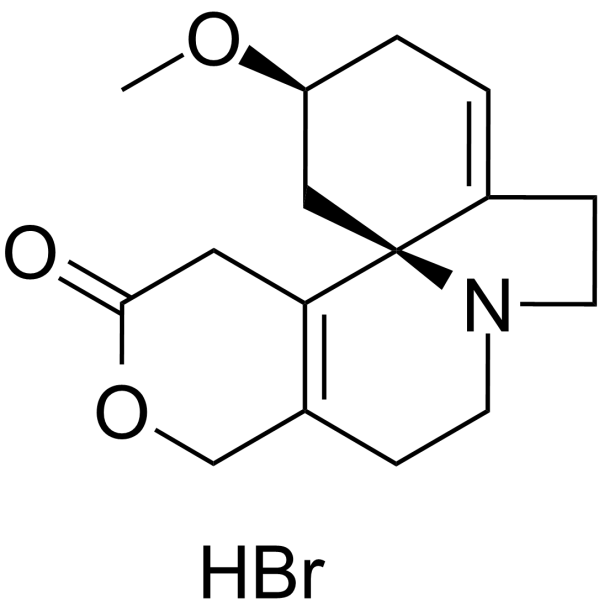
Cat. No.: HY-107670
CAS No.: 29734-68-7
Purity:  98.85%
Synonyms: DHβE hydrobromide
Dihydro-β-erythroidine (DHβE) hydrobromide is a potent, orally active, and competitive antagonist of neuronal nAChRs. Dihydro-β-erythroidine hydrobromide shows selectivity for α4β4 and α4β2 nAChRs, with IC50s of 0.19 and 0.37 μM, respectively. Antidepressant-like activities .
loading...
    loading...
1
1 Cited Publications
Cat. No.: HY-D0300
CAS No.: 129-73-7
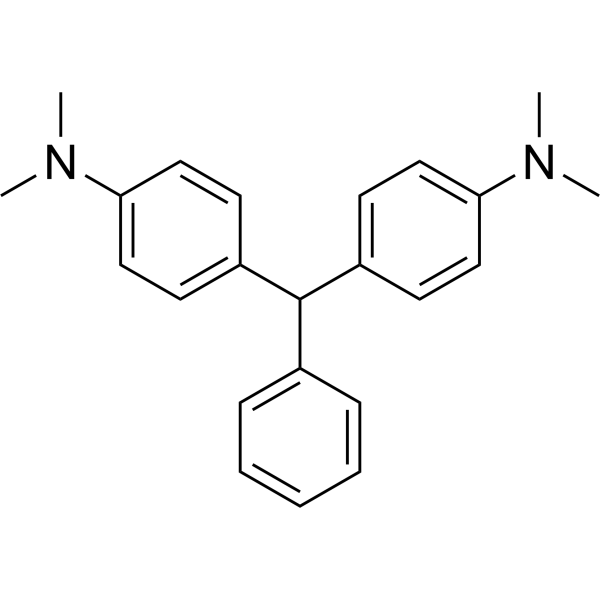
Leucomalachite green is the major reduced metabolite of malachite green (MG) and has lower cytotoxicity (such as HEp-2 and Caco-2) than malachite green. Leucomalachite green may be involved in interfering with cell metabolism or redox balance and can be used to evaluate its potential harm to human cells as a food contaminant .
loading...
    loading...
1
1 Cited Publications
Cat. No.: HY-N4134
CAS No.: 114906-74-0
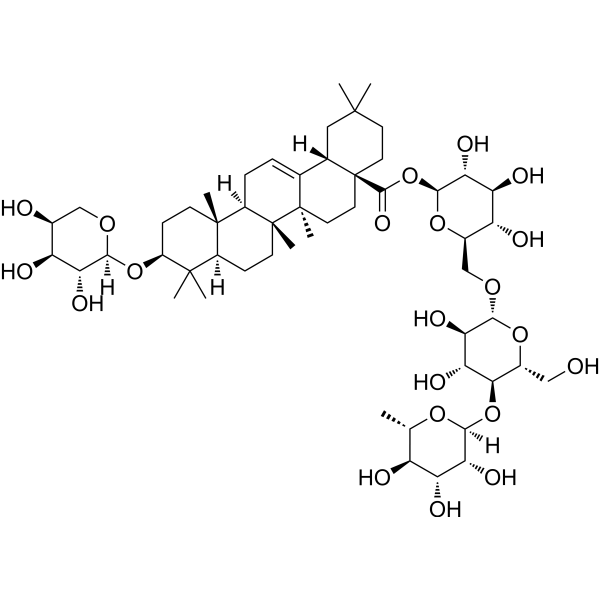
Ciwujianoside C3, an orally active and brain penetrated compound, is isolated the leaves of Acanthopanax henryi Harms. Ciwujianoside C3 has anti-inflammatory effect and can reinforces object recognition memory .
loading...
    loading...
1
1 Cited Publications
Cat. No.: HY-N3857
CAS No.: 63807-85-2
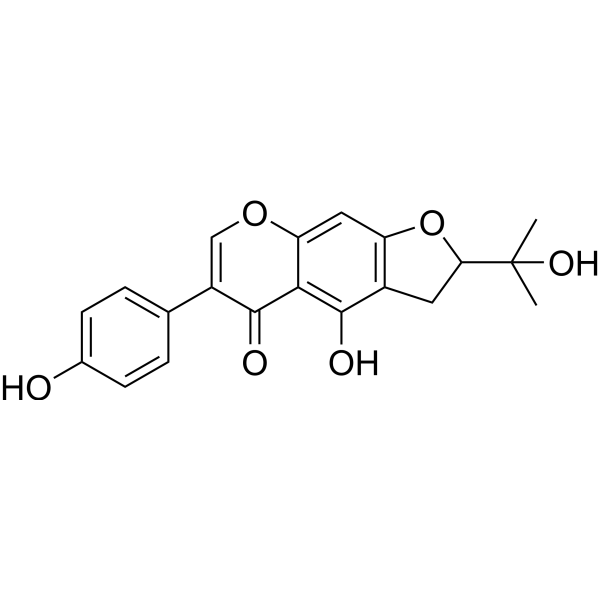
Erythrinin C is an isoflavones that can be isolated from Erythrina suberosa var .
loading...
    loading...
Cat. No.: HY-113201
CAS No.: 25597-07-3
Purity:  ≥98.0%
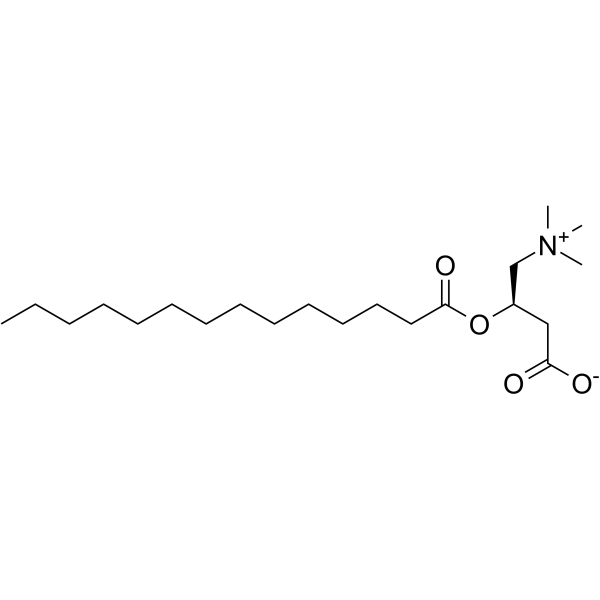
Tetradecanoylcarnitine is an acylcarnitine involved in mitochondrial β-oxidation of long-chain saturated fatty acids and fatty acid metabolism. Tetradecanoylcarnitine serves as a biomarker for very long-chain acyl-CoA dehydrogenase deficiency and MPTP (HY-15608)-induced Parkinson's disease. Tetradecanoylcarnitine exhibits a characteristic significant elevation in plasma levels in patients with sarcopenia, including those complicated with hypertension, and this elevation is closely associated with an increased risk of death. Tetradecanoylcarnitine is widely used in research on the pathological mechanisms of diseases such as Parkinson's disease and sarcopenia .
loading...
    loading...
Cat. No.: HY-W041608
CAS No.: 26172-55-4
Methylchloroisothiazolinone is a widely used fungicide and also an aquatic pollutant with pro-inflammatory activity and neurotoxicity. Methylchloroisothiazolinone induces the production of pro-inflammatory cytokines (such as IL-1β, TNF-α, IL-6) by activating the NF-κB signaling pathway and upregulating TLR4 expression, thereby triggering allergic contact dermatitis. Methylchloroisothiazolinone reduces cholinesterase activity and exacerbates oxidative stress by impairing catalase activity and disrupting redox balance. Methylchloroisothiazolinone poses significant harm to Mediterranean mussels, reducing the viability of hemocytes and digestive gland cells, inhibiting immune phagocytic function, and disrupting osmoregulatory capacity. Methylchloroisothiazolinone is used in studies on allergic contact dermatitis and related immunotoxicity mechanisms .
loading...
    loading...
Cat. No.: HY-N1653
CAS No.: 74161-25-4
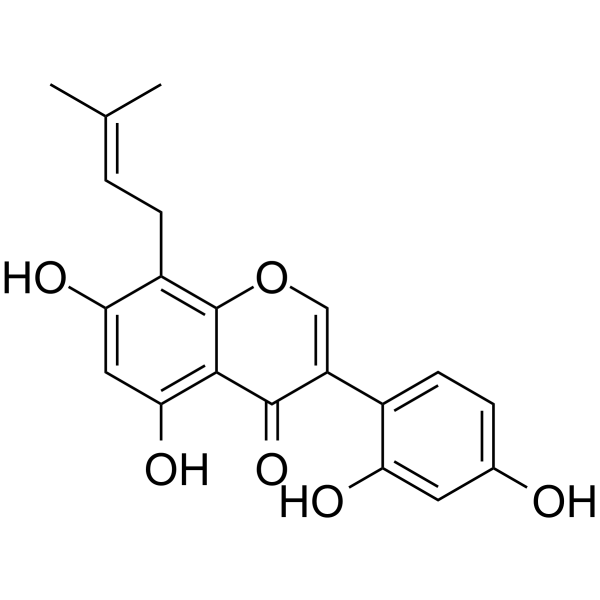
2,3-Dehydrokievitone is a isoflavanone found in Erythrina sacleuxii .
loading...
    loading...
Cat. No.: HY-N3484
CAS No.: 478158-77-9
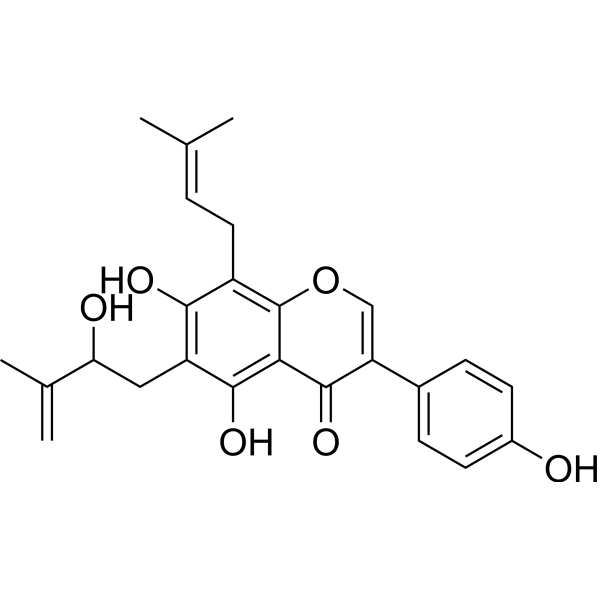
Isoerysenegalensein E (compound 3) is a natural product that can be found in Erythrina lysistemon .
loading...
    loading...
Cat. No.: HY-N2857
CAS No.: 34086-50-5
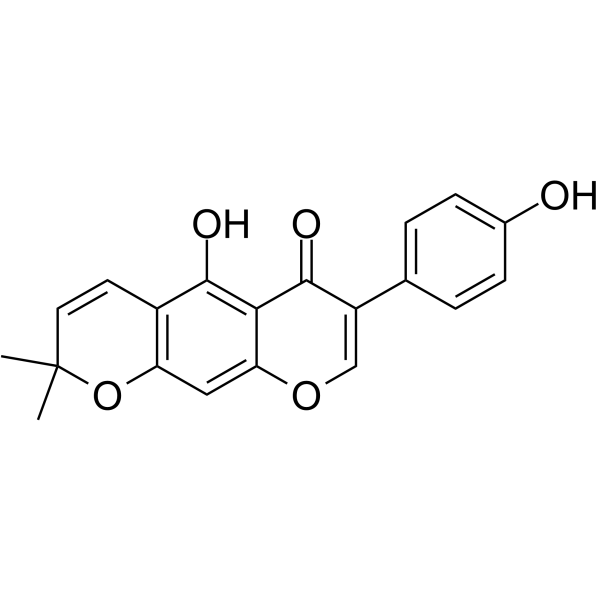
Alpinumisoflavone (compound 2) is a flavonoid derivative isolated from the stem bark of Erythrina lysistemon Hutch .
loading...
    loading...
Cat. No.: HY-N8265
CAS No.: 77263-11-7
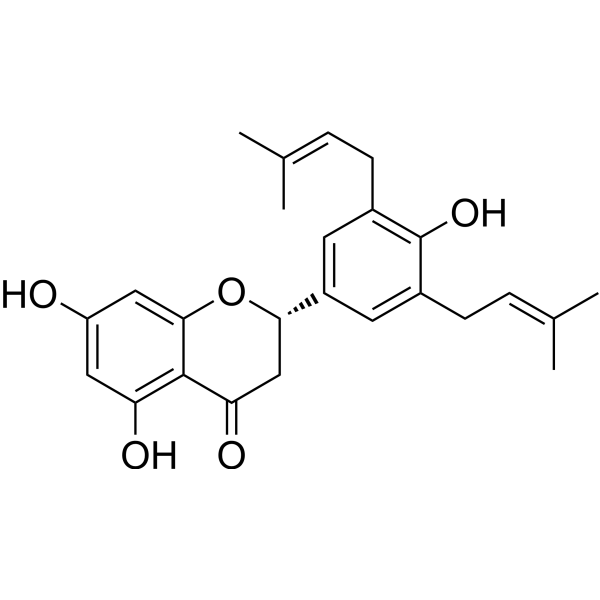
Abyssinone V is a prenylated flavonoid with predicted anti-viral activity. Abyssinone V can be isolated from the stem bark of Erythrina melanacantha. Abyssinone V possesses good pharmacodynamics properties. Abyssinone V is predicted to be antivirals including anti-herpes (HSV) agent, with mechanisms comprising inhibition of polymerase, ATPase and membrane integrity .
loading...
    loading...
Cat. No.: HY-N2906
CAS No.: 119309-02-3
Synonyms: Atalantoflavone
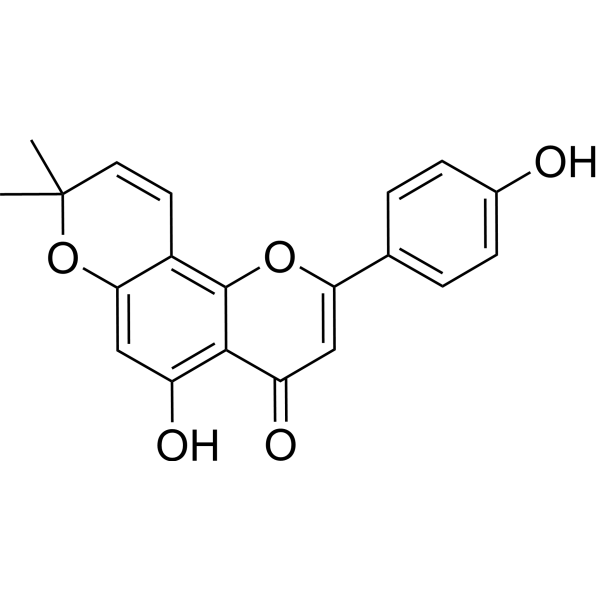
Limonianin (Atalantoflavone) is a flavone, that can be isolated from Erythrina sigmoidea and the root bark of Citrus limonia. Limonianin presents inhibitory effect against P. gingivalis. Limonianin shows cytotoxic activity against multidrug-resistant (MDR) cancer cell lines .
loading...
    loading...
Cat. No.: HY-N3642
CAS No.: 74515-47-2
Synonyms: Erythrabyssin I; Erythrabissin I
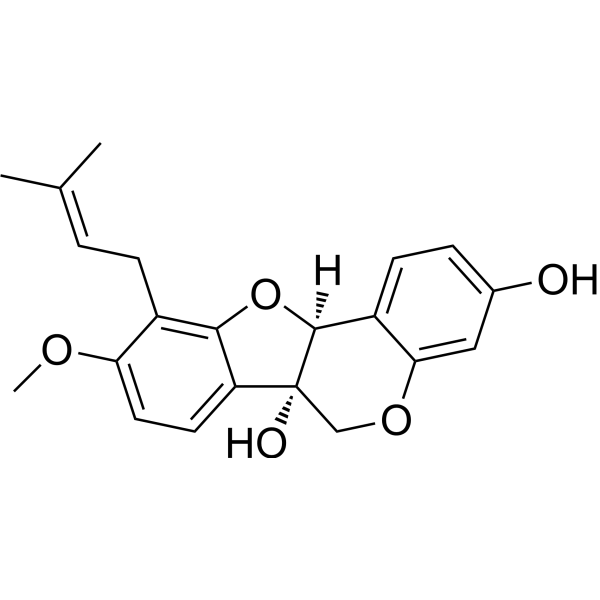
Cristacarpin can be extracted from the stem bark of Erythrina suberosa, promotes endoplasmic reticulum (ER) stress, leading to sublethal reactive oxygen species (ROS) production and ultimately cell death through senescence .
loading...
    loading...
Cat. No.: HY-W127739
CAS No.: 12122-67-7
Synonyms: Zinc ethylene-1, 2-bisdithiocarbamate
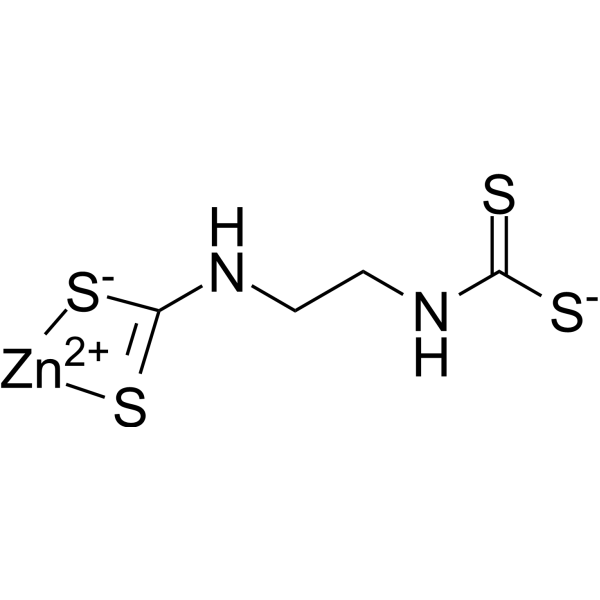
Zineb is an agricultural fungicide of the dithiocarbamate class. Its toxicity is relatively low, and there is little evidence of human harm from exposure. Oxidative stress is one of the main factors contributing to diseases caused by Zineb. Zineb does not alter the activity of any superoxide dismutase enzymes. Catalase (CAT) activity was reduced only by Zineb.
loading...
    loading...
Cat. No.: HY-109028
CAS No.: 1801749-44-9
Synonyms: TR2-A
Ceclazepide (TR2-A), a CCK2R antagonist, is an orally active Mycobacterium abscessus inhibitor. Ceclazepide inhibits acid secretion in rats. Ceclazepide effectively suppresses the growth of M. abscessus wild-type strain and multiple subspecies. Ceclazepide inhibits M. abscessus growth within macrophages without causing harm .
loading...
    loading...
Cat. No.: HY-D0300S1
CAS No.: 1173021-13-0
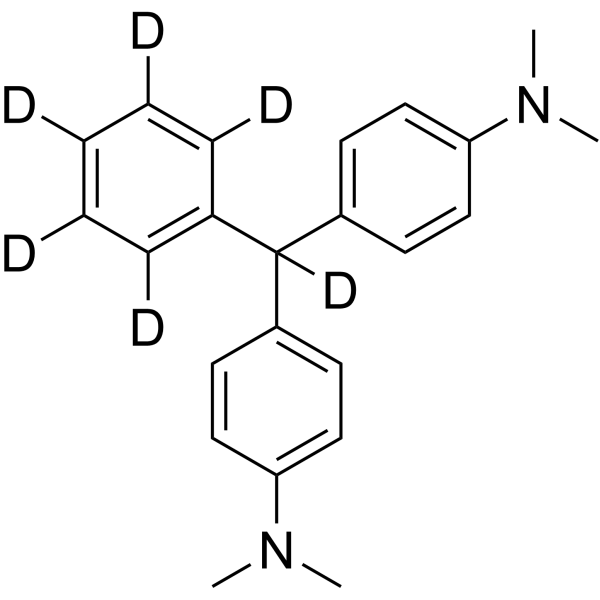
Leucomalachite green-d6 is the deuterated derivative of Leucomalachite green (HY-D0300). Leucomalachite green is the major reduced metabolite of malachite green (MG) and has lower cytotoxicity (such as HEp-2 and Caco-2) than malachite green. Leucomalachite green may be involved in interfering with cell metabolism or redox balance and can be used to evaluate its potential harm to human cells as a food contaminant .
loading...
    loading...
Cat. No.: HY-NP066
Synonyms: ECL
Erythrina Cristagalli Lectin (ECL) is a plant lectin that can be used as a probe to specifically bind biomolecules (such as polysaccharides, peptides, etc.).Erythrina Cristagalli Lectin (ECL) is a biological material or organic compound that can be used in life science research .
loading...
    loading...
Cat. No.: HY-NP0177
Synonyms: ECL (Biotinylated)
Erythrina Cristagalli Lectin (ECL) Biotinylated is a plant lectin that can be used as a probe to specifically bind biomolecules (such as polysaccharides, peptides, etc.).Erythrina Cristagalli Lectin (ECL) Biotinylated is a biological material or organic compound that can be used in life science research .
loading...
    loading...

